
Transparency: this article contains affiliate links. If you sign up or buy through them, Duurzamer Leven may earn a commission at no extra cost to you. We only recommend products we consider genuinely useful. More information.
Home Battery Subsidy 2026: Which Municipalities Offer a Discount for Your Sustainable Future?
The energy transition is in full swing, and more and more Dutch households are discovering the benefits of solar panels. But what if you don’t use the generated solar energy directly? The answer lies in the home battery. This smart energy storage solution helps you become more independent from the electricity grid and optimally utilise your own green electricity. Now that the net metering scheme ends on 1 January 2027, interest in home batteries is growing exponentially. But what about the costs? Is there such a thing as a home battery subsidy 2026? And more importantly: which municipalities in the Netherlands are contributing to this investment? This article delves deep into the possibilities for municipal discounts and provides practical guidance to maximise your subsidy opportunities.
Why a Home Battery in 2026? The Benefits at a Glance
Choosing a home battery is a logical step for anyone who wants to get serious about sustainability and energy independence. Besides becoming less dependent on fluctuating energy prices, a home battery offers many more benefits:
- Optimization of Solar Energy: With a home battery, you store the surplus energy your solar panels generate during the day, to use it in the evening or at night. This way, you utilise 100% of your own green electricity, which is not only good for the environment but also for your wallet.
- Financial Savings: By drawing less electricity from the grid, your energy costs fall significantly. This effect will only increase with the anticipated phasing out of the net metering scheme, making direct feeding back into the grid less attractive.
- Preparation for Dynamic Tariffs: More and more energy suppliers are introducing dynamic energy contracts. With a home battery, you can intelligently respond to these tariffs by charging when electricity is cheap and discharging when it becomes more expensive, resulting in even greater savings.
- Increase in Grid Stability: By storing and consuming energy at a local level, you help to relieve the energy grid, contributing to a more stable and efficient energy supply for everyone.
- Emergency Power Supply: Although not all systems offer this, some home batteries can also function as an emergency power supply during power outages, providing extra peace of mind.
Investing in a home battery is therefore not only a sustainable choice but also a smart economic decision for the long term.
Home Battery Subsidy 2026: A Municipal Search
Unlike solar panels, for which the national ISDE subsidy (Investment Subsidy for Sustainable Energy and Energy Saving) is available for certain insulation measures and heat pumps, there is currently no national subsidy for the purchase of a home battery. This means that in your search for a home battery subsidy 2026, you must primarily focus your efforts on the local level: the municipalities and sometimes the provinces.
Many municipalities in the Netherlands recognise the importance of energy storage to accelerate the local energy transition and relieve the electricity grid. However, the schemes are fragmented and can differ greatly per municipality. Some municipalities offer a specific municipal home battery subsidy, while other municipalities opt for favourable loans, tailor-made advice, or other incentives. It is crucial to understand that the presence, amount, and conditions of these subsidies are entirely dependent on the policy and available budgets of your specific municipality.
How to Check for a Home Battery Subsidy with Your Municipality in 2026?
The absence of a central database for municipal subsidies can complicate the search, but with the right approach, you may find the support you are looking for. Here are the steps you can take to ascertain the home battery subsidy 2026 in your municipality:
Step 1: Visit Your Municipality’s Website
Always start with your municipality’s official website. Search using keywords such as “sustainability subsidy”, “energy saving”, “home battery subsidy”, “green roof subsidy” or “energy transition”. Many municipalities have a special page on sustainability or energy transition where this kind of information can be found. Pay attention to the most recent schemes, as policy can change annually.
Step 2: Contact the Municipality
If the website does not offer clear information, do not hesitate to contact your municipality. Ask for the department of sustainability, environment, or spatial planning. They can often tell you directly whether there are specific schemes for home batteries or broader incentive measures for energy storage. A phone call or email can often provide much clarity.
Step 3: Consult Local Energy Desks and Sustainability Centres
Many municipalities and regions have local energy desks or sustainability centres. These are independent bodies that provide free advice on energy saving and sustainable solutions for your home. They are often well-informed about all local and regional subsidy opportunities, including any municipal home battery subsidy. They can also help you apply for the subsidy.
Step 4: Check Provincial Subsidies
Although less common for individual home batteries, provinces sometimes offer overarching schemes for sustainable projects. It is worth checking your province’s website or inquiring at the provincial energy desk.
Step 5: Combination with Solar Panels and ISDE
It is important to emphasise that a home battery often goes hand in hand with solar panels. Although the ISDE subsidy is not directly for home batteries, it is available for the installation of solar panels. If you don’t have solar panels yet, or want to expand your system, you can apply for a subsidy for this. This lowers the total investment threshold of your sustainable energy system. When considering investing in solar panels and a home battery, ensure you include the possibilities for the ISDE subsidy for solar panels in your calculation.
For all subsidy opportunities, pay close attention to the specific conditions. Some subsidies, for example, are linked to a combination with solar panels, a certain storage capacity, or only apply to homes in specific districts. Budgets are also often limited and the principle ‘while stocks last’ applies. Prompt action is therefore often advisable.
Practical Examples and Future Perspectives
Although a national home battery subsidy 2026 is still absent for now, we see more and more municipalities taking the lead. Various municipalities are experimenting with pilot projects or small-scale schemes for energy storage. The pressure on the electricity grid is increasing, and the need for local energy storage is becoming ever clearer. Therefore, it is expected that more municipalities will follow in the coming years with incentive measures for home batteries.
By investigating what possibilities exist in your municipality now, you optimally prepare yourself for the future. Even if there is no direct subsidy now, engaging in conversation with your municipality can encourage policymakers to consider this and perhaps introduce a municipal home battery subsidy in the future.
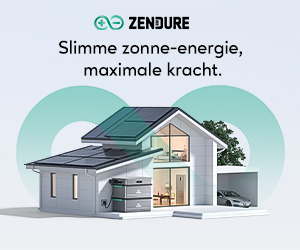
Ready to invest in a home battery? The plug-in home battery from Zendure (SolarFlow) connects to your existing inverter and stores your electricity without extensive installation — increasingly interesting now that the net metering scheme ends on 1 January 2027.
Conclusion: Take Matters Into Your Own Hands
The path to a more sustainable and energy-independent household is paved with smart choices. The home battery is an essential part of that future, especially with a view to 2026 and beyond. Although there is no national home battery subsidy 2026, opportunities lie at the local level. By proactively contacting your municipality, consulting local energy desks, and thoroughly studying the conditions, you increase your chances of a financial contribution for your home battery.
Don’t wait any longer! Start your research today into the municipal home battery subsidy and take that important step towards a more sustainable, efficient, and cost-effective energy supply for your home. Your investment in a home battery is an investment in a greener future, for yourself and for the Netherlands.
Related guide: our complete Home Battery guide 2026.